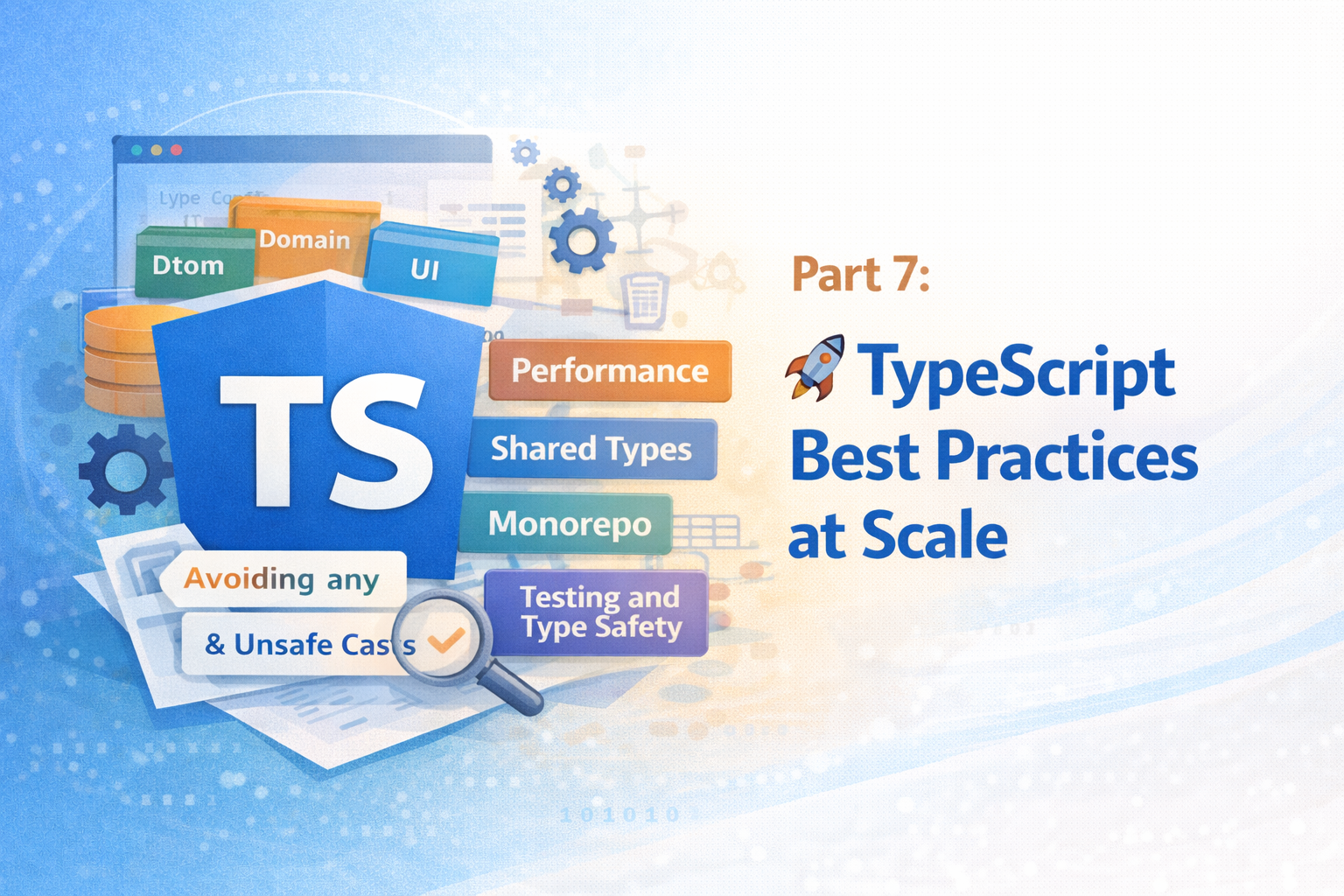

As applications grow into large-scale systems, TypeScript is no longer just about typing variables—it becomes a design tool. In this part, we’ll focus on best practices used in production-grade codebases to keep TypeScript maintainable, performant, and safe at scale.
This guide is especially useful for:
- Enterprise applications
- SaaS platforms
- Monorepos
- Large React / Angular projects
1. Type Architecture: Domain vs DTO vs UI Models
One of the most common mistakes is using the same type everywhere.
❌ Bad Practice
// Used in API, UI, and business logic
interface User {
  id: string;
  name: string;
  createdAt: string;
}
✅ Recommended Separation
Domain Model (Business Logic)
interface User {
  id: string;
  name: string;
  createdAt: Date;
}
DTO (API Layer)
interface UserDTO {
  id: string;
  name: string;
  createdAt: string; // ISO string
}
UI Model
interface UserView {
  id: string;
  displayName: string;
  joinedOn: string;
}
Benefits
- Clear boundaries
- Easier refactoring
- Safer API changes
2. Avoiding any & Unsafe Type Casts
❌ Avoid This
const data: any = fetchData();
const user = data.user;
✅ Prefer unknown
const data: unknown = fetchData();

if (isUser(data)) {
  console.log(data.name);
}
Use Type Guards
function isUser(value: any): value is User {
  return value && typeof value.id === 'string';
}
Rule of Thumb
If you must use
any, isolate it at the boundary.
3. Performance & Compile-Time Tricks
Enable Strict Mode
{
  "compilerOptions": {
    "strict": true
  }
}
Prefer Type Aliases for Complex Types
type UserId = string;
type ApiResult<T> = { data: T; error?: string };
Avoid Excessive Conditional Types
- Deep conditional types slow compilation
- Prefer simpler utility types when possible
Use as const Wisely
const roles = ['admin', 'user'] as const;
type Role = typeof roles[number];
4. Monorepo & Shared Types Strategy
Common Structure
/packages
  /types
    user.ts
    api.ts
  /ui
  /backend
Shared Types Package
// packages/types/user.ts
export interface UserDTO {
  id: string;
  name: string;
}
Best Practices
- Keep shared types framework-agnostic
- Avoid importing UI-specific types in backend
- Version shared packages carefully
5. Testing & Type Safety
Use Types in Tests
const mockUser: User = {
  id: '1',
  name: 'Test',
  createdAt: new Date(),
};
Prefer Compile-Time Safety Over Runtime Checks
- Let TypeScript catch errors early
- Reduce redundant runtime validations
Contract Testing
- Validate DTOs at API boundaries
- Keep tests aligned with types
6. General Best Practices Summary
- Separate concerns with proper type layers
- Never spread
any - Keep types close to usage
- Use utility types instead of duplication
- Treat TypeScript as part of system design
Final Thoughts
At scale, good TypeScript is less about syntax and more about architecture.
By following these best practices, you ensure:
- Long-term maintainability
- Safer refactors
- Faster onboarding
- Higher code confidence