Detecting whether an Android device is rooted or an iOS device is jailbroken is a security-sensitive task, and it’s important to note that no method is foolproof. Determining the root or jailbreak status can be challenging due to various techniques used by users to hide such modifications. However, there are libraries available that attempt to […]

Rooted (Android) or jailbroken (iOS) devices pose security concerns because these modifications grant users elevated privileges and the ability to bypass built-in security mechanisms. Here are some common security concerns associated with rooted or jailbroken devices: 1. Elevated Privileges: 2. Malicious Apps: 3. Bypassing App Store Security: 4. Security Patch Bypass: 5. Tampering with System Files: 6. […]
In the digital age, the web has become an integral part of our lives, connecting us to information, services, and each other. However, with this connectivity comes the challenge of securing our online experiences. This article delves into the world of common web vulnerabilities, shedding light on the threats that lurk beneath the surface of […]
Building a web app for Augmented Reality (AR) and Virtual Reality (VR) can be a complex but exciting endeavour. These technologies offer immersive and interactive experiences to users. Here’s a general guide on how to build a web app for AR and VR: 1. Define Your AR/VR Project: 2. Choose the Right Framework: 3. Select […]
Lazy loading is a technique used to defer the loading of images and videos on a web page until they are about to enter the user’s viewport (the visible portion of the page). This can significantly improve page load times and reduce unnecessary data transfer. To implement lazy loading, you can use the loading attribute […]
Improving page load time is crucial for providing a better user experience, reducing bounce rates, and potentially improving your website’s search engine rankings. Here are some strategies to help you improve page load time: Optimize Images: Minify CSS and JavaScript: Leverage Browser Caching: Enable Gzip Compression: Optimize Critical Render Path: Reduce HTTP Requests: Lazy Loading: […]
Inline Critical CSS refers to the practice of including critical (above-the-fold) CSS directly within the HTML of a web page, rather than loading it from an external stylesheet file. This technique can help reduce the time it takes for a web page to render because the browser doesn’t have to make an additional HTTP request […]
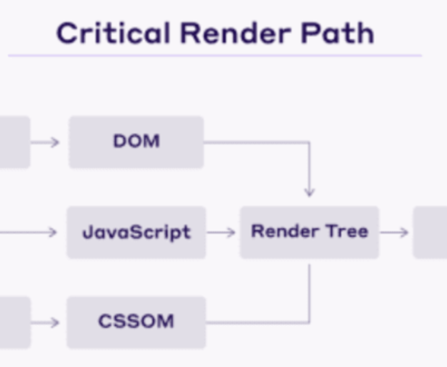
Combining the Document Object Model (DOM) and the CSS Object Model (CSSOM) to create a Render Tree is a crucial step in the browser rendering process. Below is a simplified example illustrating how the DOM and CSSOM are combined: Let’s consider a simple HTML document: DOM Construction: The browser parses the HTML and constructs the […]
The Document Object Model (DOM) and the CSS Object Model (CSSOM) are critical components of web browsers that represent the structure and styling of a web page, respectively. Here, I’ll explain how the DOM and CSSOM are created and provide examples. Creating the DOM (Document Object Model): The DOM is a hierarchical tree-like structure that represents […]
The Critical Render Path (CRP) is a concept in web performance optimization that refers to the sequence of steps the browser takes to render the initial view of a web page on the user’s screen. Understanding and optimizing the CRP is crucial for delivering fast-loading web pages. The CRP consists of several key stages: HTML […]