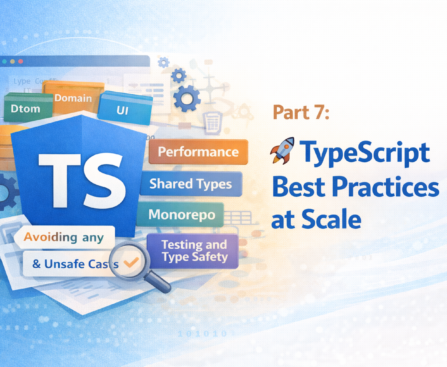
As applications grow into large-scale systems, TypeScript is no longer just about typing variables—it becomes a design tool. In this part, we’ll focus on best practices used in production-grade codebases to keep TypeScript maintainable, performant, and safe at scale. This guide is especially useful for: 1. Type Architecture: Domain vs DTO vs UI Models One […]
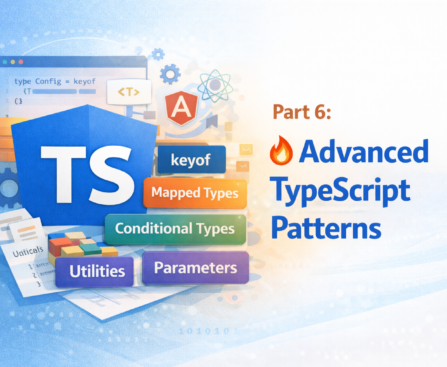
Once you’re comfortable with utility types and generics, the next step is mastering advanced TypeScript patterns. These patterns are heavily used in React, Angular, and large-scale enterprise applications to build flexible, type-safe, and reusable abstractions. In this part, we’ll cover: 1. keyof – Getting Keys of a Type What it does keyof produces a union […]
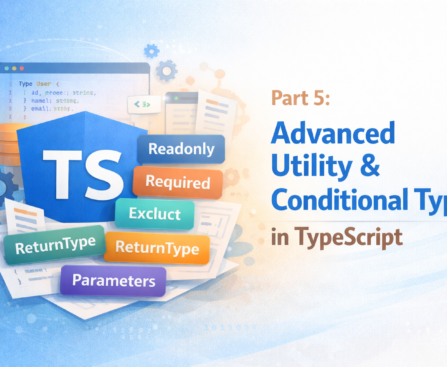
As your TypeScript codebase grows, advanced utility and conditional types become essential tools for writing safe, scalable, and expressive code. These types help you transform existing types instead of rewriting them, reducing bugs and duplication. In this part, we’ll cover the most commonly used advanced utility types with real-world examples: 1. Readonly<T> What it does […]
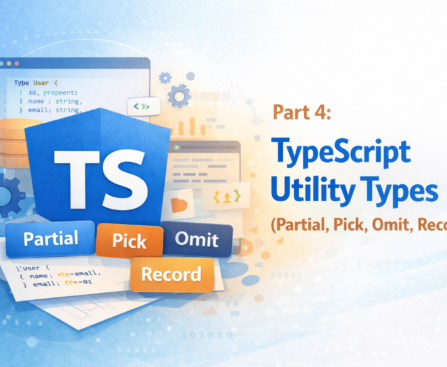
Introduction In Part 3, we explored Generics in TypeScript and how they help build reusable, type-safe abstractions. In this part, we’ll focus on one of the most practical and frequently used features in real-world TypeScript projects: Utility Types TypeScript utility types help you transform existing types instead of rewriting them, making your code more concise, […]
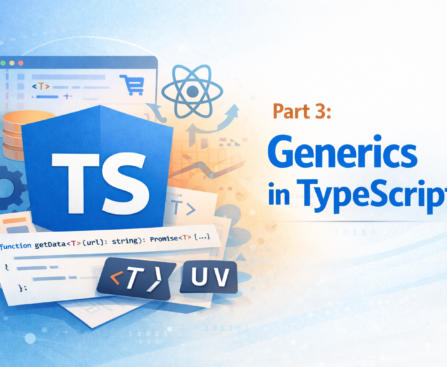
Introduction In Part 1, we learned what TypeScript is and why it’s useful. In Part 2, we explored the differences between type and interface. In this part, we’ll cover one of the most powerful features of TypeScript: Generics Generics allow you to write reusable, type-safe, and flexible code that works with multiple data types without […]
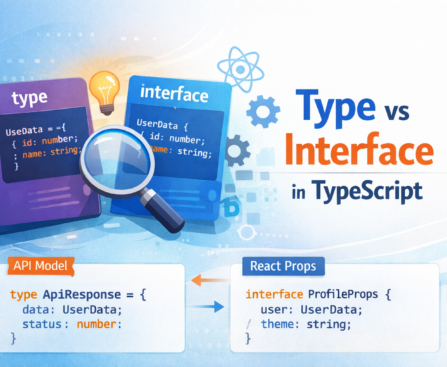
Introduction In Part 1, we discussed what TypeScript is and why it is useful in modern development. In this part, we’ll dive deeper into one of the most commonly asked and often confusing topics in TypeScript: Type vs Interface – what’s the difference and when should you use which? Both type and interface are used […]
Introduction JavaScript is one of the most popular programming languages in the world and the backbone of modern web development. However, as applications grow larger and more complex, maintaining JavaScript codebases can become challenging. This is where TypeScript comes in. TypeScript is designed to make JavaScript development more scalable, maintainable, and less error-prone—especially for large […]
We’ll be discussing how to control code quality in your React Typescript project. Writing high-quality code is essential for building maintainable and scalable applications. Here are some tips and best practices that you can use to ensure that your code meets the highest standards. Use a Linter: A linter is a tool that analyzes your […]
TypeScript is a popular programming language that is known for its static type-checking and type annotations features, which make code easier to read and maintain. However, to ensure that TypeScript code meets the desired quality standards, several tools are available for developers. These tools help to maintain code quality by analyzing the code, detecting errors […]